
OUR WORK
Our group's contributions in the area of computational mechanics spans development of methodologies to characterize deformation and fracture behavior of existing and emerging materials and structural systems, topology optimization for large-scale and multiscale/multiphysics problems, and origami.
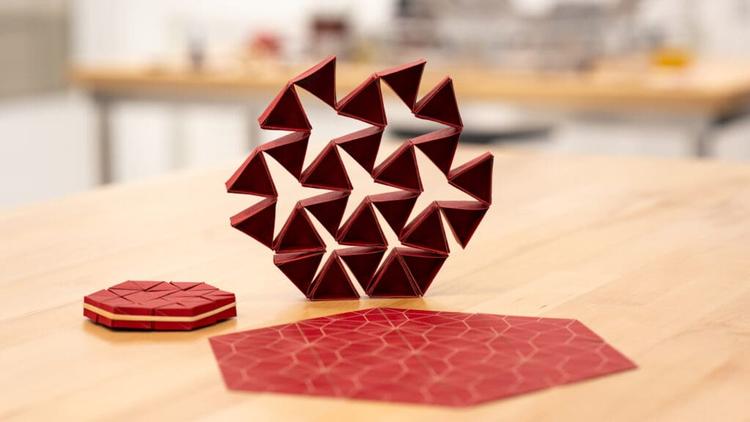
ORIGAMI ENGINEERING
Through origami engineering, we seek to create exciting new structures and machines. Origami traces its origins to an ancient art form transforming flat thin surfaces into various complex, fabulous 3D objects. Nowadays, such transformation transcends art by offering a conceptual framework for non-destructive and scale-independent abstractions for engineering applications across diverse fields with potential impact in education, science and technology. For instance, a growing number of architected materials and structures are based on origami principles, leading to unique properties that are distinct from those previously found in either natural or engineered systems.
TOPOLOGY OPTIMIZATION
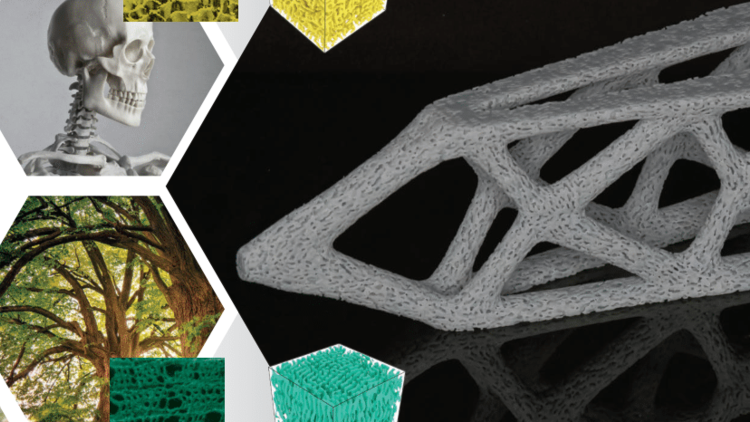
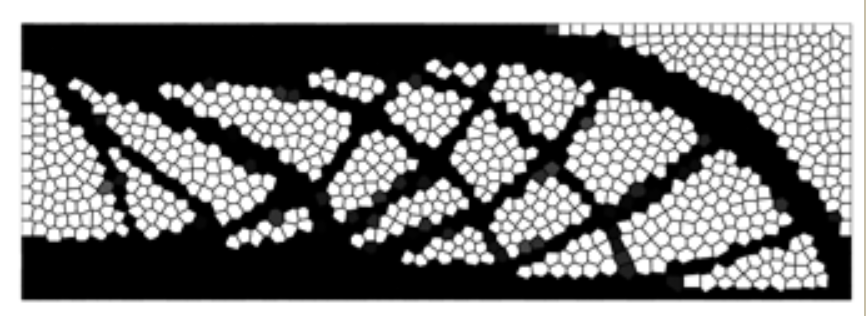
Topology optimization is a method used in engineering design to determine the optimal distribution of material within a defined space, aiming to maximize performance while minimizing material usage. It involves using algorithms to find the best shape and layout of a structure, such as a bracket or a bridge, to achieve desired goals like strength, stiffness, or weight reduction. Our group has created many programs, such as PolyDyna, PolyTop3D, PolyTopFluid, and many more.
MATERIAL ENGINEERING
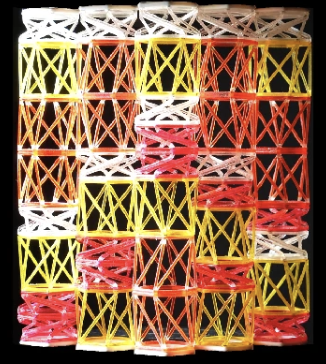
Our group designs new metamaterials, a notable example of which is the metabot—something that is controllable through a magnetic field and can change from a material to a robot. Our modular, chiral origami metamaterials may one day enable us to simulate non-commutative states and other complex behaviors.
FRACTURE MECHANICS
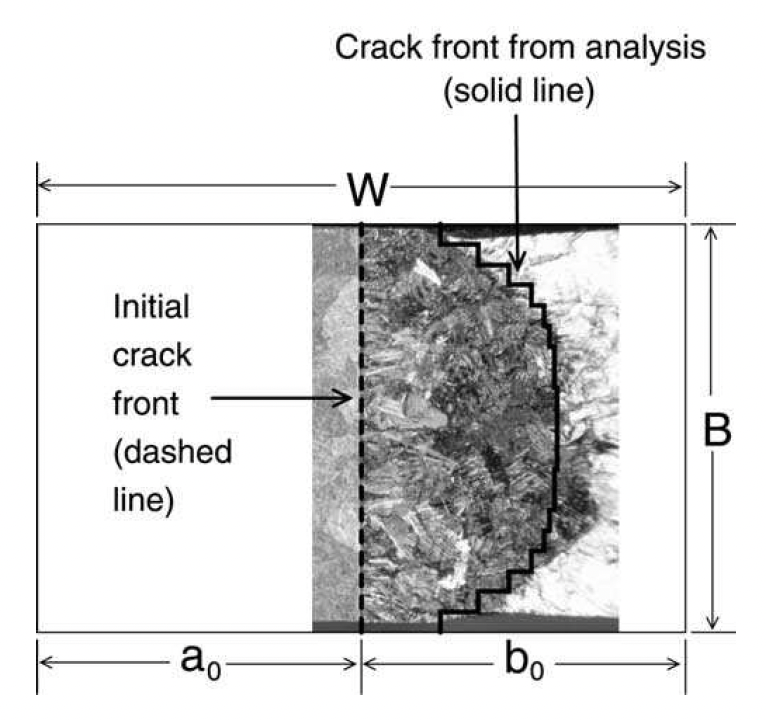
Our group conducted research related to the formation of cracks, the behavior of materials under stress, and how ceramic and metal functionally graded materials (FGMs) experience elastic-plastic crack growths. Our research delves into crack initiation angle as well, to better understand the behavior of brittle FGMs under mixed-mode loading conditions.
COMPUTATIONAL MECHANICS
For computational mechanics, we conducted research on structural topology optimization, adaptive mesh refinement, topological data structures, and more. For example, to avoid instabilities, we used Voronoi diagrams to create a high degree of geometric isotropy in unstructured polygonal meshes.